Dating the Past Without Carbon
Binary search as a methodological tool for dating non-biological archaeological artefact
Dating the Past Without Carbon
Binary search as a methodological tool for dating non-biological archaeological artefacts
When an archaeologist unearths a fragment of an amphora, a broken column or the foundation of a wall, they face one of the most fascinating and complex challenges in the entire discipline: establishing when that object was made. Unlike organic remains — bones, seeds, charred wood — inorganic materials contain no carbon-14 and therefore elude the radiometric dating technique that revolutionised archaeology in the second half of the twentieth century. How, then, can one place a worked stone, a fired brick or a terracotta vessel in time?
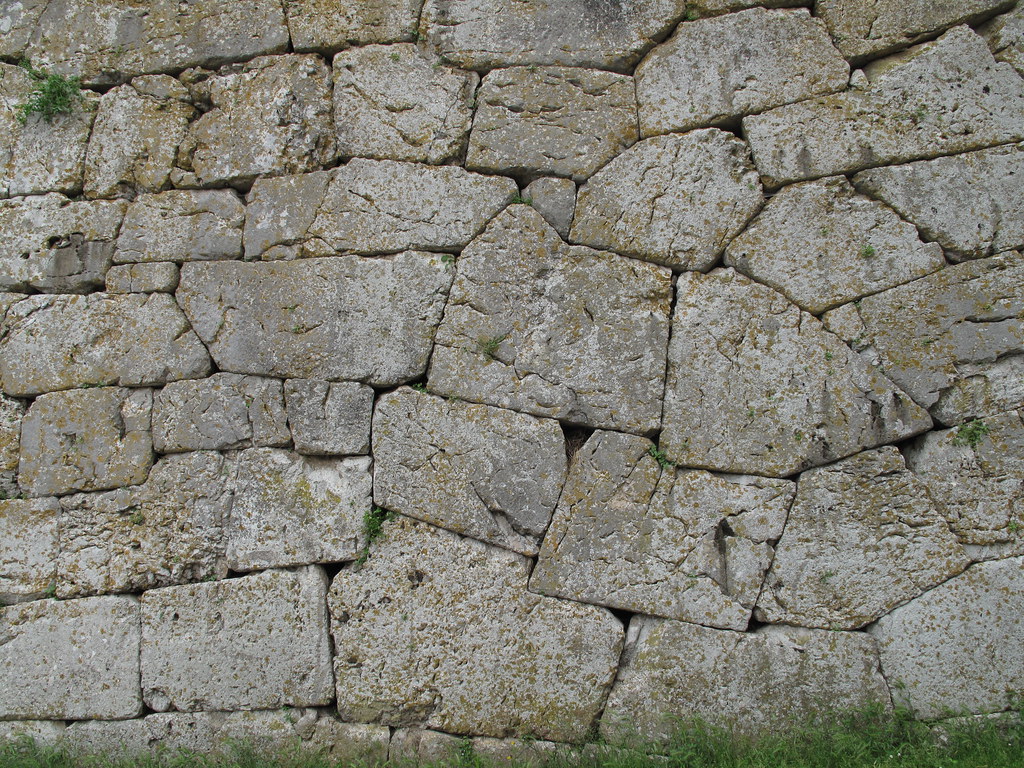
The problem of dating non-biological artefacts
Several instrumental techniques are available for inorganic materials, each with distinct advantages and limitations.
Thermoluminescence (TL) and its variant OSL (Optically Stimulated Luminescence) measure the light emitted by a mineral when it is heated or exposed to radiation: this light is proportional to the time elapsed since the material was last exposed to heat or sunlight. The method is powerful and applicable to ceramics, fired bricks and sediments, but requires well-equipped laboratories, samples collected under controlled conditions, and considerable cost.
Dendrochronology — based on the annual growth rings of wood — is extraordinarily precise, but obviously inapplicable to stone or metal.
For ferrous materials there is archaeomagnetism, which exploits the fact that during firing, ferrous minerals align with the terrestrial magnetic field of the time: by comparing this alignment with known palaeomagnetic curves, a date can be inferred. This technique also requires specialised equipment.
In the day-to-day practice of excavation, however, these instrumental methods are used far less frequently than one might expect. The reasons are many: the high cost of laboratory analyses, the need to collect samples under controlled — and often destructive — conditions, the long waiting times for results, and the limited accessibility of specialised facilities, especially during fieldwork campaigns in remote areas. In many operational contexts, these techniques are simply unavailable or cannot be economically justified for every single artefact brought to light.
Dating therefore relies almost invariably on multidisciplinary approaches that integrate different areas of expertise: epigraphy, which interprets inscriptions, dedications or brick stamps to extract direct chronological references; art history, which situates the artefact within known stylistic and typological sequences; and materials science, which through the analysis of chemical composition, manufacturing techniques and raw material sources allows comparisons with already-dated specimens.
When applicable, these approaches yield reliable and often surprisingly precise results. They do, however, share a fundamental limitation: they depend entirely on the possibility of anchoring the artefact to an already established frame of reference. And that possibility fails in at least three recurrent situations.
The first is that of the artefact bearing no inscription: an anonymous column, an undressed block without a stamp, a mosaic without a dedicatory text offers no epigraphic foothold, and the scholar is left reasoning on purely formal and contextual grounds.
The second is that of the morphologically isolated artefact: if the shape of a vessel, a tool or an architectural element finds no parallel in any established typological corpus — because it belongs to a poorly studied culture, a marginal local production, or simply to a craftsman who worked outside the conventions of his time — stylistic analysis yields no useful information.
The third, and perhaps most radical, is that of the artefact in natural or minimally worked material: a stone used as a percussion tool, a boulder employed as a foundation element, a rock bearing barely perceptible traces of use. In these cases there is no style to analyse, no technology to classify, no inscription to read. The artefact blends into the geological context and dating must rely almost exclusively on stratigraphic position and association with other materials — with all the margins of uncertainty that this entails.
It is precisely in these borderline cases — paradoxically the most common in long-term excavations and surface surveys — that the dating process is reduced to its essence: a progressive narrowing of uncertainty around a central value, conducted through the accumulation of partial clues and their synthesis in the expert’s judgement. The operator never reaches the point of saying “this artefact is exactly 2,000 years old”, but may arrive at “it is probably between 1,800 and 2,200 years old” — and that margin, however wide, is already a result.
Binary search: a simple idea for a complex problem
This iterative, approximation-based nature suggests an interesting analogy with a classic algorithm in computer science: binary search, also known as dichotomous search.
The principle is straightforward. Suppose we want to guess a number between 1 and 1,000. Rather than proceeding by random guesses, the optimal strategy is always to ask: “Is the number greater or less than 500?”. A single answer eliminates half the possibilities. Then: “Is it greater or less than 750?”. Each question halves the search space. In at most ten questions, any number in the range 1–1,000 can be identified.
Applied to dating, the method works as follows: the expert formulates an initial estimate of the artefact’s age — drawing on the excavation context, technological characteristics and accumulated experience — and then subjects this estimate to a series of binary checks. “Is the artefact less than 2,000 years old?” If the answer is yes, the interval narrows into the lower half. If no, into the upper half. With each answer — which may come from a laboratory analysis, a typological comparison or a consultation with colleagues — the uncertainty is halved. The process ends when the remaining interval falls within the resolution acceptable for that type of artefact and for the purposes of the research.
For an artefact a few hundred years old, a precision of ten years may be meaningful. For a Roman column or an Etruscan vessel, an estimate with a margin of one hundred years is already an excellent result. For artefacts on a geological scale — a Palaeolithic lithic tool — even an approximation of ten thousand years represents valuable data. Binary search adapts naturally to this variability, adjusting the granularity of the search according to the order of magnitude of the presumed age.
A PWA for field dating
Within this methodological framework, Archaeological Artefact Dating has been developed: a Progressive Web App (PWA) designed to assist the operator during the estimation and preliminary chronological classification of an artefact.
The application implements the binary search algorithm described above in an interactive form. The user enters an initial estimate of the artefact’s age — even a rough one — and answers a sequence of questions of the type “Is the artefact less than X years old?”. The app progressively narrows the search interval and stops automatically when the difference between the current maximum and minimum values falls below the resolution threshold for the relevant age cluster:
| Estimated age (years) | Resolution |
|---|---|
| 10 – 10,000 | 10 yrs |
| 10,001 – 100,000 | 100 yrs |
| 100,001 – 1,000,000 | 1,000 yrs |
| 1,000,001 – 100,000,000 | 10,000 yrs |
| 100,000,001 – 4,500,000,000 | 100,000 yrs |
The result is displayed rounded down to the nearest multiple of the resolution, together with the total number of questions asked.
The application can be used directly from the browser of any mobile device and, once installed on the Home screen, works fully offline thanks to the integrated Service Worker — a valuable feature in remote excavation contexts without internet connectivity. It requires no installation from a store, collects no data, and needs no manual updates.
The PWA does not, of course, replace laboratory analyses or the expert’s judgement: it is a methodological support tool, useful for structuring the estimative reasoning process, documenting the dating procedure step by step through the answer log, and communicating transparently the level of uncertainty associated with the final estimate.
by Luca Severini, May 2023, Berlin, DE
The application is available as an installable PWA for mobile devices. To try and install PWA click here GitHub.io. Information about PWA installation and code is provided in GitHub.com.